
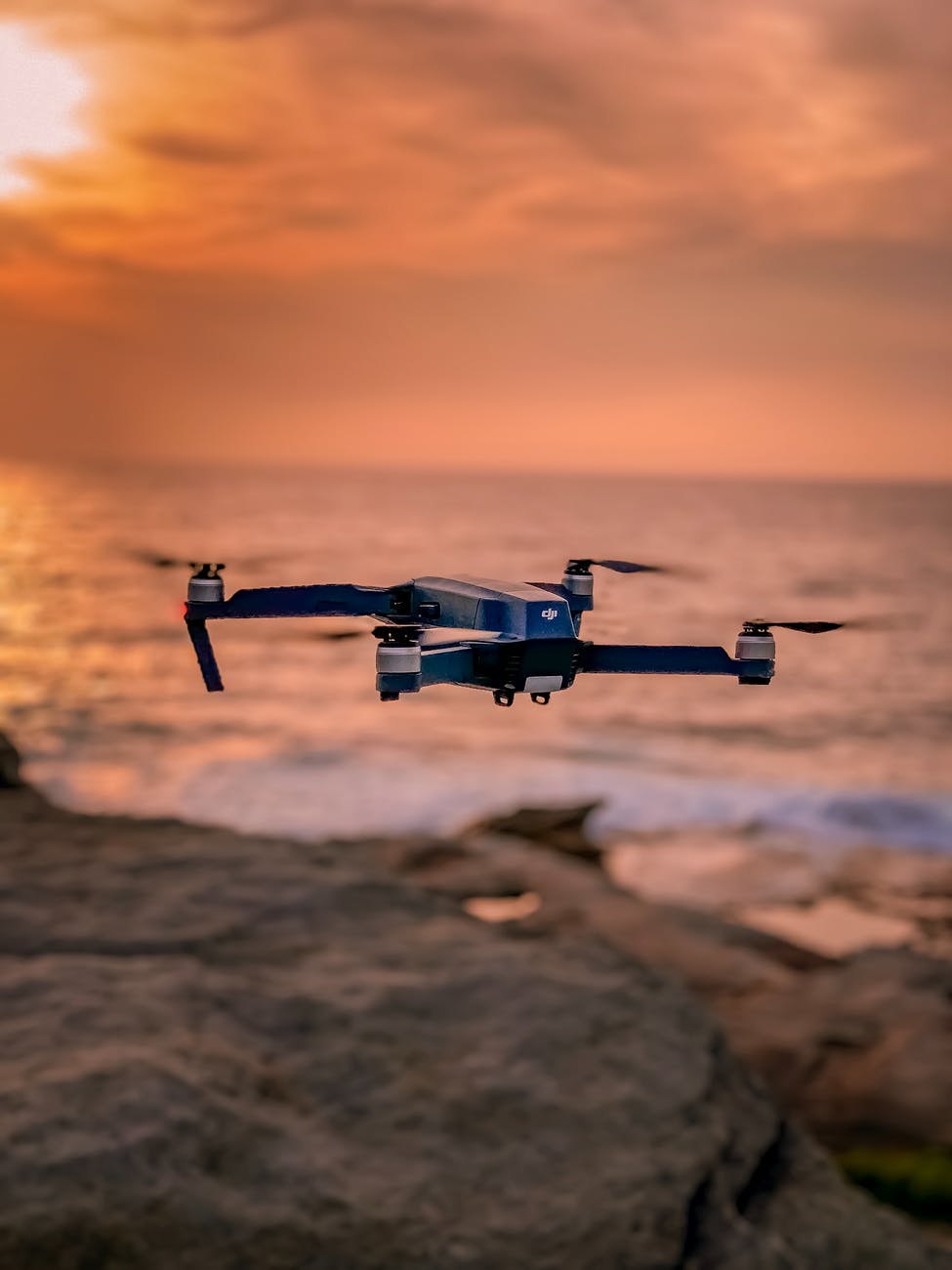
So, you’re in the market for a drone. Great! I’m a photographer and videographer who’s been flying drones for years, so I’m here to help. There are a lot of factors that go into choosing the right drone for your needs, but one of the most important is going to be where and what you shoot. Will you be taking pictures on-location at weddings? Filming in the mountains? Or maybe even shooting aerial photos from high above your house? Whatever your needs are, I’ve got an excellent recommendation.
Mavic Mini
The Mavic Mini is a DJI drone that’s affordable, portable and easy to use.
The Mavic Mini was released in 2018 and has been an instant hit for its portability, durability and ease of use. It boasts the same flight time as larger models at 31 minutes from a single battery charge but folds up into an easily portable size. With its palm-sized body it’s also lightweight at 279g (9.8oz).
The camera on this little guy is 8MP which provides 4K quality video recording at 30fps or 1080p quality at 60fps if you’re looking to save some space on your SD card when filming HD footage. The lens is adjustable too so you can get just the right shot from your drone whether you’re flying indoors or out on open fields (or beaches).
If you’re looking for something even more portable than this little guy’s palm sized design then check out our article about best drones under £1000!
Mavic Air
The Mavic Air is DJI’s most compact and portable drone. With its small size, you can easily transport it wherever you go. It also has a lightweight design weighing only 1.2 pounds (567 grams), which makes it easy to carry around while traveling or hiking.
The Mavic Air comes with a 12MP camera that can shoot 4K video at 30fps and 1080p slow-motion videos at 120fps for more cinematic shots than ever before! You’ll be able to capture every moment in stunning detail with this tiny yet powerful device that’s ready to fly wherever you are!
Mavic Pro Platinum
The Mavic Pro Platinum is the latest iteration of the Mavic Pro, one of DJI’s most popular drones. It can fly for up to 31 minutes on a single battery and reach speeds up to 60 kph/37 mph. That’s not all it has going for it: The drone’s camera can shoot 4K video at 30 fps and take 12 MP still photos from its 1/2.3″ CMOS sensor with an 83° field of view.
The Mavic Pro Platinum also has some other neat features, including OcuSync 2 transmission, which uses DJI’s Lightbridge streaming technology to provide stable video transmission at distances over four times farther than before (up to 8 km). This means no more fuzzy video or freezing images when you go beyond line-of-sight range! The new Clarity+ 1080p camera gimbal gives you precise control over your shots while maintaining smoothness even in high winds, so you can record steady footage regardless of where or how fast you’re traveling.*
The same compact design as its predecessor makes it easy for beginners but advanced pilots will appreciate having access*to features like ActiveTrack that allows them better control over what they capture during flight.*
Phantom 4 Pro V2.0
The Phantom 4 Pro V2.0 is the newest version of DJI’s most popular drone, and it comes with a few improvements over its predecessor.
- It’s the only drone on this list that supports 5GHz WiFi and FPV via first-person view goggles—which means you can see what your camera sees in real-time as you fly around your environment.
- It’s also got a longer range (4.3 miles) than either the Mavic or Spark, but with a max flight time of 30 minutes per charge (compared to 21 minutes for both other models).
- All three drones have obstacle avoidance built into their design, but only the Phantom 4 Pro V2.0 boasts ActiveTrack technology that keeps flying subjects in frame while tracking them as they move across your field of vision. This is helpful if you’re trying to get cinematic shots instead of just flying around aimlessly like an amateur photographer would do when they get bored during their vacation trip abroad! If all else fails at least there’s still one thing left – right?
Phantom 4 Advanced
DJI’s Phantom 4 Advanced is a serious drone that offers professional photographers and videographers everything they need to capture high-quality aerial footage. It has a 1-inch 20MP sensor and a mechanical shutter, which means it can capture incredibly detailed images in any light condition. The camera can shoot 4K video at up to 60fps, or 1080p video at 120fps for slow motion effects. It also has a 3-axis gimbal that helps keep your shots steady no matter how rapidly you’re flying.
The Phantom 4 Advanced comes with two different cameras: an RGB 20MP monochrome camera that enables sharper detail in low light conditions (such as when there are clouds), as well as another one with visible red, green and blue filters so you can see where objects are positioned relative to one another — even on cloudy days.
The FlightAutonomy system enables the drone to avoid obstacles without needing human assistance by using ultrasonic sensors located near its belly and front end; this makes sure you don’t have to worry about crashing into trees or buildings while flying around them!
Phantom 3 Standard
The Phantom 3 Standard is a great choice for first-time drone pilots. It has an easy-to-use 4K camera and the ability to live stream your flight, so you can share aerial video with friends and family. The drone also has built-in GPS, which means it can return to home automatically if you lose connection or run out of battery power. The Phantom 3 Standard also comes with two Intelligent Flight Modes: Point of Interest, where the drone locks onto an object (like a tree) for filming or photography; and Follow Me mode, which allows you to program your DJI drone so that it follows your movements while taking pictures or videos of you at the same time!
The Phantom 3 Standard’s battery life lasts 25 minutes per charge—more than enough time for recording even long flights over rough terrain. Its range is up to 2 miles away from its remote controller, making it perfect for high altitude photography and videography above crowded cities like New York City or Washington DC!
Spark
The Spark is DJI’s smallest and cheapest drone, with a price tag that sits around £500. It’s also one of the most popular models on the market right now, with an average rating of 4 out of 5 stars on Amazon after nearly 3,000 reviews. In terms of size and price, it’s fairly comparable to Parrot’s Mambo series or even Intel’s Falcon 8+.
The Spark boasts a 12-megapixel camera that has a 1/2.3″ CMOS sensor and FOV 80 degrees wide angle lens capable of shooting 1080p video at 30fps or 720p video at 60fps. The gimbal can stabilize the camera in all directions except for downwards; however, this feature does not work when recording video at 120 fps (4K). There are three flight modes: Easy mode for beginners; Gesture mode for selfies; Sport mode for quick movements and tracking objects in motion. The controller also has two buttons: one allows you to take photos from up to 16 feet away from your drone while flying (or while hovering), while another allows you to take selfies without having to touch your phone screen or press any other buttons on your device. If none of these features sound appealing but still want something small enough to fit inside your backpack then keep reading!
Inspire 2
If you’ve got the money and want the best of everything, DJI’s Inspire 2 might be for you.
The £4,999 quadcopter comes with a 3-axis gimbal and 19-inch propellers that can support up to 24 pounds of payload; this means it can carry some serious camera gear. It also packs a 20-minute flight time, which is more than enough time to get from point A to point B without having to recharge in the middle of an important shoot.
The Inspire 2 has some pretty impressive features: 4K video at up to 60 fps; 8 GB of internal storage; one SD card slot for an additional 128 GB; two remote controllers (one included) that can be used together or separately; a maximum range of 1.7 miles (so long as there are no obstacles); and a removable battery pack that lasts 50 minutes on its own as well as 20 minutes while filming in cinema mode.
You can control your drone from up to 1.7 miles away—you don’t even need line-of-sight visibility! Just use Wi-Fi while flying through areas where there may not be cell reception or other wireless signals available nearby such as mountainsides or forests where fewer people live so they aren’t clogging up bandwidth around town with traffic congestion caused by too many cars trying just about anywhere else but here.”
Matrice 200 Series
The Matrice 200 Series is built for heavy lifting. It can accommodate up to five batteries, which allows you to fly longer and maximize your efficiency by switching out batteries on the fly. In addition to being able to take more weight, the camera gimbal has been upgraded from a three-axis system to a four-axis one. This means that your footage will be smoother than ever before—you’ll feel like you’re floating in mid-air!
The Matrice 200 Series is professional grade with its high speed data transmission rates of up to 70 megabytes per second (depending on your model), allowing for smooth aerial video streaming when flying in crowded areas or when working with multiple pilots all at once. If you’re planning on doing some filming or photography with this drone, then I highly recommend getting yourself a DJI Ronin S gimbal stabilizer so that you can capture every moment effortlessly!
Drones are a great technology that can help you get amazing aerial photographs and videos!
Drones are a great technology that can help you get amazing aerial photographs and videos! Whether you’re looking for a drone as a hobby or to improve your photography skills, there’s one out there that will suit your needs.
Drones are becoming more popular as technology advances, so it’s no wonder why they have become such a common topic of conversation. If you’re curious about owning one yourself, this guide will provide the information needed to make an informed decision on which model would be best suited for your needs.
Conclusion
Drones are a great tool for improving your photography and video. Drone prices vary depending on the model and its features, so it’s important to do your research before buying one. We hope that this guide has helped you decide which drone is right for you!